


What Happens to Your Unwanted Items When You Move in Alberta
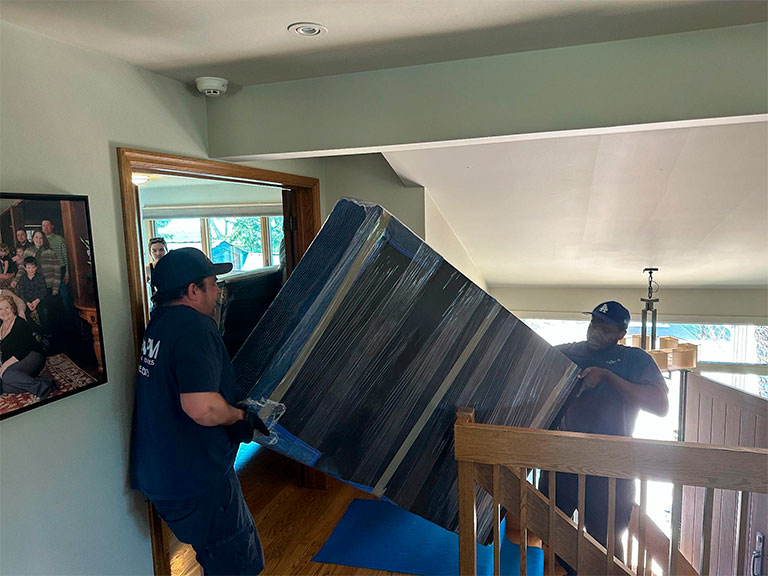
Alberta moves come with a problem most people underestimate until they are standing in front of a full house two days before the truck arrives. Not everything is coming with you, and the question of what to do with the rest rarely has a clean answer. Selling takes time you do not have. Throwing things away feels wasteful. Donating sounds straightforward until you realize it requires a separate trip, a separate vehicle load, and separate coordination with an organization you have never contacted before.
The problem gets sharper on long-distance moves. If you are relocating from Calgary to Edmonton, Red Deer, or Lethbridge, you have a single window before departure to deal with everything that is not coming with you. Once the truck leaves Calgary, the donation opportunity closes. This article explains how the donation process works in Alberta, which charities accept donations and why, and how Alberta Pro Movers coordinates drop-offs with eight Calgary charity partners as part of every move.
Why Donating During an Alberta Move Is Harder Than It Sounds
The logistical challenge of donating during a move is universal, but it is more pronounced in Alberta than in many other provinces. Alberta cities are far apart: Calgary to Edmonton is 300 kilometres, Calgary to Lethbridge is 215 kilometres, Calgary to Red Deer is 145 kilometres. When you are relocating between cities, you are not just managing a move but managing a departure. Everything that does not fit in the truck either gets resolved before you leave or gets left behind, often literally.
For people moving within Calgary or to nearby communities, the challenge is different but equally real. Move day is consumed by the logistics of packing, loading, and transit. A separate errand to a donation centre requires energy that is simply not available on that day. The intention exists. The execution falls apart under the weight of everything else happening at once.
The result, across both types of moves, is the same: furniture and household items in perfectly good condition end up at the curb or in a landfill. Calgary municipal waste data consistently show that residential moves are among the primary contributors to bulky-item waste. Most of that material is functional and could have been put to use if the logistics had been handled differently.
How Charity Donations Work in Calgary - What Alberta Residents Need to Know
Calgary has a well-developed network of charitable organizations that accept donated goods on an ongoing basis. Alberta Pro Movers works with eight of these organizations as confirmed donation partners. Each one serves a different segment of the community: some focus on families in crisis, others on individuals experiencing homelessness, others on people with disabilities, and others on employment reintegration. All eight are profiled in detail further below.
Intake Criteria Vary by Organization - and That Is the Point
No two charities in Calgary accept exactly the same items under exactly the same conditions. Some focus specifically on furniture and household goods that help families re-establish stable home environments. Others prioritize clothing, bedding, and personal items for people in acute, immediate need. Some organizations use donated goods directly within their programs, furnishing transitional housing units or supplying shelters on an ongoing basis. Others sell donated goods through thrift retail stores, using the proceeds to fund employment training, addiction recovery programs, or adaptive equipment for people with disabilities.
This differentiation is not a barrier. It is a system. When the right items reach the right organization, the impact is specific rather than diffuse. A piece of furniture that one organization cannot accommodate may be exactly what another currently needs most. The more clearly items are matched to the organization that needs them, the more directly the donation translates into actual use.
A moving company with pre-established relationships across all eight organizations can do this matching on-site, on move day, without the customer having to research intake criteria in advance. That is what changes the outcome.
The Window Before a Long-Distance Move Is the Right Moment
For Alberta residents moving out of Calgary, the donation window is defined by departure. Items that are not coming on the truck need to be dealt with before the truck leaves, which means the days immediately before move day, or move day itself, are the only realistic opportunity. Attempting to coordinate a donation run after arriving in a new city, while unpacking, setting up utilities, and managing the first days in a new home, is when donation plans most reliably fall apart.
The most efficient approach for long-distance moves is to identify donation items during pre-move decluttering, one to two weeks before moving day, and flag them for the crew. On move day, those items can be loaded separately and dropped off at the appropriate charity partner on the route out of Calgary. No extra trip. No separate coordination. The donation happens as part of the departure.
For Alberta residents moving within Calgary or to nearby communities like Airdrie, Cochrane, or Okotoks, the same principle applies. Move day itself is the right moment, not the days after.
What Happens to Donated Items - Where They Go in the Community
Donated goods in Calgary do not disappear into a generic warehouse. Each of the eight organizations routes donated items through a specific program tied to specific people. Some operate thrift retail stores, where donated goods are priced and sold, and the proceeds fund social programs such as employment training, food assistance, shelter, and addiction recovery. Others distribute donated goods directly within their programs, without resale.
In the case of direct-use organizations, furniture from a donor's home can be in a transitional housing unit within days: a bed, a table, a dresser, the basic material infrastructure of a living space that someone is returning to after a period of homelessness. For organizations that fund disability programs or employment training through resale, the quality and condition of donated items directly determine the level of funding those programs receive.
Understanding this specificity changes how people think about what is worth donating. A piece of furniture that feels marginal to someone mid-move is often precisely what an organization needs most, either to place directly into a housing unit or to generate funding through its sale.
What You Can Donate When Moving in Alberta - By Category
The following categories cover the most common items available for donation during a residential move. Each has specific considerations based on the condition requirements and the organizations most likely to accept them.
Furniture
Sofas, armchairs, dining tables, chairs, dressers, wardrobes, bookshelves, bed frames, and desks are among the most in-demand donated items across all eight Calgary charity partners. Condition requirements apply: furniture with significant structural damage, heavy staining, or evidence of pest infestation is not accepted. Clean, functional items, even older ones, are consistently welcomed.
Furniture is also the category most affected by decisions about long-distance moves. When relocating from Calgary to Edmonton or another Alberta city, large furniture items are often the first to be left behind, not because people do not want to keep them, but because shipping a sofa 300 kilometres is expensive relative to its replacement value. That creates a natural opportunity for donation, but only if the logistics are in place to act on it.
"In our experience, large furniture is the item people most want to donate, but least often manage to transport themselves. Once donation pickup is integrated directly into the moving route, the number of usable items that avoid landfill increases dramatically."
Adam O'Keefe, moving industry expert
Having a moving crew that handles the drop-off as part of the existing route removes this barrier entirely. The item does not need a second vehicle or a second trip. It goes from the home to the charity on the same day the truck is loaded.
Household Items and Kitchenware
Dishes, pots and pans, cutlery, small kitchen appliances, lamps, mirrors, picture frames, decorative items, and linens are consistently in demand and easy to process. These items fit in boxes, require no special handling, and are accepted by virtually all of the eight partner organizations. Working appliances are accepted; non-working appliances are not. Linens should be clean.
For people moving out of Alberta or consolidating households before a long-distance move, kitchenware is among the most practical donation categories. It is often duplicated, rarely worth shipping, and immediately useful to organizations furnishing transitional housing.
Clothing and Personal Items
Clothing donations are accepted year-round across all eight organizations, with particular demand for winter items during the colder months, a relevant consideration in Alberta's climate. Children's clothing, winter outerwear, work attire, and footwear in good condition are among the highest-priority categories. The Salvation Army, WINS, and Goodwill Industries all run active clothing intake programs. Items should be clean and free of significant damage.
For seniors downsizing or preparing for a move to a smaller home or care facility, clothing is often the largest donation category. Our senior moving services in Alberta include donation coordination so that the decluttering process and the move itself happen together, not as separate events.
Electronics
Working electronics such as laptops, tablets, phones, small televisions, and household electronics are accepted by several of the eight partner organizations. Non-working items are generally not accepted for donation. The City of Calgary operates household hazardous waste and electronics recycling depots for items that cannot be donated. If you are unsure whether an item will be accepted, the moving crew can advise on-site based on current partner criteria.
What Cannot Be Donated?
Items not accepted by Calgary charities typically include: mattresses (due to hygiene regulations under Alberta Health Services guidelines), large appliances without prior arrangement, items with significant mould or pest damage, medications and personal care products, and items in non-functional condition. For long-distance moves, it is worth identifying non-donatable items during pre-move decluttering so they can be disposed of separately before the truck departs, rather than being discovered on move day when time is short.
How Alberta Pro Movers Coordinates Donation Drop-Offs
Alberta Pro Movers works with eight established Calgary charities as confirmed donation partners. The process is built into every move: customers flag items for donation at the time of booking or on move day, the crew assesses what can be accepted based on each partner's current criteria, and the drop-off is coordinated as part of the overall move. No separate trip is required. No additional coordination is required of the customer.
The company's pre-established relationships with each partner organization mean that intake capacity, accepted item categories, and drop-off logistics are already known before the crew arrives. The customer does not need to research which charity accepts what or call ahead to confirm. The crew handles the matching on-site.
Especially Useful for Long-Distance Moves Out of Calgary
For customers relocating from Calgary to another Alberta city, donation coordination directly solves the departure problem. Items flagged for donation are assessed and loaded on move day, and the drop-off occurs before the truck leaves Calgary on its route to the destination. Whether you are moving to Edmonton, Lethbridge, Red Deer, or any other Alberta community, the donation process is resolved before you leave, not left as an unfinished task at the origin address.
For customers planning a long-distance move in Alberta, we recommend identifying items for donation during the booking conversation. This allows the crew to plan truck space and routing in advance, rather than making those decisions under time pressure on move day.
Evening Availability - Moves From 5 PM Onward
Alberta Pro Movers offers evening moves starting from 5 PM. For customers who work standard hours, this means move day does not require time off. Evening availability applies equally to moves that include donation coordination. For customers planning an urgent relocation, our last-minute moving services in Alberta include the same donation coordination process, even on same-day bookings, if items are identified and separated when the crew arrives.
Alberta Pro Movers Eight Calgary Charity Partners
All eight of Alberta Pro Movers' donation partners are based in Calgary. For customers moving out of Calgary, the drop-off happens before departure. For customers moving within Calgary or to nearby communities, it happens as part of the same-day route. Below is a full profile of each organization.
WINS - Women in Need Society

WINS operates thrift stores across Calgary and funds programs that support women and families affected by poverty, crisis, and domestic violence. Donated goods are distributed through their store network and directly to families in need. WINS is particularly focused on furniture, household goods, and clothing, the material foundations of a stable home.
What they accept: Furniture, clothing, housewares, kitchenware, linens, small appliances.
Alpha House Calgary

Alpha House provides shelter and crisis support for individuals affected by addiction and homelessness, including a 24-hour detox centre and transitional housing programs. Donated furniture and household items are used directly to furnish transitional housing units, going from a donor's home to someone's first stable living space.
What they accept: Furniture, bedding, household items, clothing.
Calgary Drop-In Centre

One of Canada's largest emergency shelters, the Calgary Drop-In Centre, has served over 1,000 individuals daily since 1961. Donated clothing and personal items are distributed directly to shelter guests and transitional housing residents, often within days of the donation being processed.
What they accept: Clothing, footwear, bedding, personal care items, small household goods.
Inn from the Cold

Inn from the Cold specifically serves Calgary families experiencing homelessness, including parents and children who have lost housing. Donated furniture and household items furnish family units in transitional housing, equipping families with their first stable living space after a period of homelessness.
What they accept: Furniture, household items, children's items, clothing, and kitchenware.
Easter Seals Canada - Alberta

Easter Seals Canada supports Albertans living with physical disabilities through equipment funding, camp programs, and community support. In Alberta, proceeds from donated goods fund adaptive equipment and program access for individuals who could not otherwise afford them. The quality and condition of donated items directly affect the funding generated.
What they accept: Furniture, clothing, household goods, electronics in working condition.
The Salvation Army

The Salvation Army operates one of Calgary's broadest social service networks, including food assistance, shelter, addiction recovery, and family programs. Proceeds from donated goods at thrift stores fund all of these programs simultaneously. The Salvation Army is among the highest-volume donation centres in Calgary and accepts the widest range of items.
What they accept: Furniture, clothing, household goods, kitchenware, electronics, books, small appliances.
The Mustard Seed (The Seed)

The Mustard Seed serves Calgarians experiencing poverty and homelessness through food, shelter, housing support, and recovery programs. Their community store provides donated goods directly to program participants at little or no cost, with clothing and household items going to people currently in recovery or re-entering stable housing.
What they accept: Clothing, household items, kitchenware, linens, and small furniture.
Goodwill Industries of Alberta

Goodwill Industries of Alberta operates retail donation stores across the province, using proceeds to fund employment training and job placement for Calgarians with barriers to work, including people with disabilities, newcomers, and long-term unemployed individuals. Goodwill accepts the broadest range of items among the eight partners, and its employment mission means that donated goods support economic inclusion alongside immediate material needs.
What they accept: Furniture, clothing, household goods, electronics, books, sporting goods, small appliances.
How the Process Works - Step by Step
For customers moving anywhere in Alberta, within Calgary, to nearby communities, or to another city, the donation coordination process follows the same four steps. The key variable is timing: for long-distance moves, earlier identification of donation items allows for better planning.
1.Identify items for donation before booking or on move day. Walk through the home and physically separate anything you want to donate. For long-distance moves, doing this one to two weeks before moving day gives the crew time to plan routing and confirm charity intake capacity in advance.
2.Mention donation items when booking your move. This allows the team to factor the drop-off into the routing plan and truck space. For larger furniture donations or long-distance departures, advance notice makes the logistics smoother.
3.The crew assesses items on move day. Based on the condition and each partner's current intake criteria, the crew confirms which items can be accepted and by which organization. This happens on-site. No prior research is required from the customer.
4.Donation drop-off is handled as part of the move. Items are delivered to the relevant charity partner as part of the existing route. For long-distance moves out of Calgary, drop-offs happen before the truck departs. Local moves occur on the route between addresses. The customer does not need to arrange a separate trip or be present at the drop-off.
Evening moves from 5 PM onward are available across all move types, including those with donation coordination.
Moving to Alberta? Let Us Handle the Donation Drop-Off Before You Go.
Alberta Pro Movers coordinates donation drop-offs with eight trusted Calgary charities as a built-in part of every move, local or long-distance. No extra trips. No extra effort. Whether you are staying in Calgary or relocating across the province, just tell us what you would like to donate when you book.
Frequently Asked Questions
Can I donate items when I am moving from Calgary to Edmonton or another city in Alberta?
Yes. For long-distance moves out of Calgary, donation drop-offs are coordinated before the truck departs. Items are assessed on move day, loaded separately, and delivered to the relevant charity partner on the route out of Calgary. You do not need to arrange anything separately. Just identify the items in advance and mention them when booking.
What if I am moving within Alberta but not from Calgary?
Alberta Pro Movers' eight charity partners are all based in Calgary. If you are moving from another city in Alberta and want to coordinate a donation, this is something to discuss when booking. The team can advise on the best approach based on your specific route and timeline.
Do I need to contact the charity myself?
No. Alberta Pro Movers coordinates directly with charity partners. You do not need to call ahead, confirm drop-off arrangements, or be present at the charity location.
What if I am not sure whether an item will be accepted?
The crew can advise on-site based on current criteria from each of the eight partner organizations. If an item cannot be accepted due to condition, size, or current intake limits, you will know before it is loaded, not after.

Recent Posts
- What Movers Charge Per Hour Across Alberta: Calgary, Edmonton, Red Deer, Lethbridge, Fort McMurray
- First Apartment Checklist: Everything You Need for Your First Move
- Last-Minute Movers in Calgary: What to Do When You Need to Move Fast
- Senior Moving Services in Calgary: Compassionate Help for Older Adults
- Calgary Movers with No Hidden Fees: How to Get a Fixed Quote and Avoid Surprise Charges
- Moving With Pets: How to Keep Animals Calm and Safe During a Move