


How to Move a Piano in Calgary Safely: Costs, Equipment, and Climate Protection
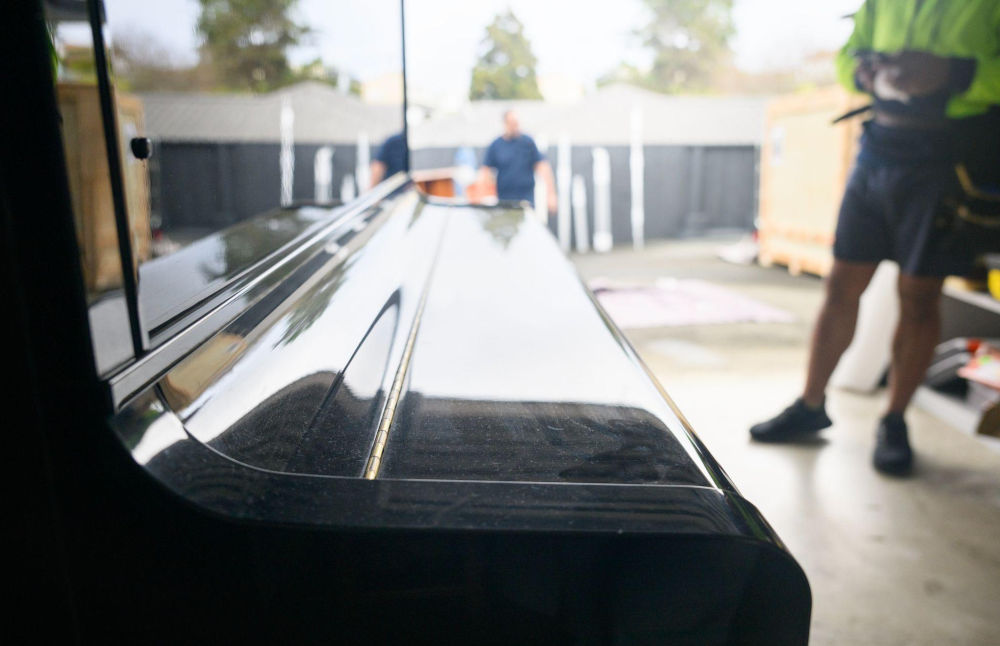
Moving a piano is one of the most physically demanding and technically complex tasks in any residential or commercial relocation. A standard upright piano weighs between 400 and 900 pounds, while a grand piano can exceed 1,200 pounds, and the instrument's internal components are sensitive to temperature swings, humidity changes, and physical shock. In Calgary, where winter temperatures can drop well below minus 20 degrees Celsius and seasonal humidity shifts are significant, those risks are amplified well beyond what most homeowners anticipate.
The consequences of a poorly planned piano move extend beyond a scratched finish. A soundboard crack, broken string, or shifted internal mechanism can cost thousands of dollars to repair, and the default liability protection under Alberta's household-goods carriage regulations covers far less than most piano owners realize. Understanding the regulatory framework, the right equipment, and the specific challenges of Calgary's climate is what separates a safe piano relocation from an expensive mistake.
Alberta Pro Movers is a fully insured Calgary moving company with BBB accreditation, providing specialty-item moving services, including piano relocation, for both residential and commercial clients throughout Calgary and Alberta.
Key Takeaways
- A piano qualifies as a household good under Alberta's Traffic Safety Act regulations. The default carrier liability is CAD 0.60 per pound per item, meaning a 600-pound upright piano is covered for a maximum of CAD 360 unless you purchase additional valuation coverage.
- Alberta regulations require authorized carriers to prepare a bill of lading for every household-goods shipment. Review it carefully before signing, and confirm it includes a condition inventory of your piano.
- Grand pianos require leg and lyre removal, a piano board (skid board), and a minimum of four trained movers. Upright pianos require a heavy-duty piano dolly and at least two to three people.
- Calgary's climate creates real risk during transport. Rapid changes in temperature and humidity can cause soundboard cracking, tuning instability, and wood swelling if the piano is not properly wrapped and moved in a climate-controlled vehicle.
- Professional piano-moving guidance recommends 24 to 48 hours of acclimation after arrival before removing wrapping, and scheduling a piano tuning two to three weeks after the move to allow the soundboard to stabilize.
- DIY piano moves without proper equipment carry serious risks of injury and instrument damage. Piano dollies, skid boards, ramps, and industrial-strength harnesses are not available at standard equipment rental outlets.
- If a move goes wrong, the Canadian Association of Movers provides a structured complaint process, including referrals to provincial consumer protection agencies and the Better Business Bureau.
- The federal Office of Consumer Affairs recommends obtaining written estimates and verifying adequate insurance protection before any move involving high-value belongings.
What Makes Piano Moving Different from Standard Furniture Relocation
Piano moving is a specialized subset of household-goods moving that requires dedicated equipment, trained crew members, and environmental risk management that standard furniture relocation does not demand. The combination of extreme weight, fragile internal mechanics, and sensitivity to humidity and temperature places pianos in a category that professional movers treat separately from general household items.
Why Pianos Require Specialized Handling
A piano is not simply a heavy object. The instrument contains thousands of moving parts, a cast-iron plate, a spruce soundboard, and strings under enormous combined tension. Any significant impact, tilt beyond a safe angle, or rapid temperature change can shift the internal structure, break strings, or crack the soundboard. Professional guidance consistently identifies pianos alongside antiques and fine art as items requiring what the industry calls white-glove service: climate-conscious packing, moisture barriers, custom padding, and climate-controlled transport.
Specialist piano transit guidance confirms that professional movers rely on piano dollies, skid boards, ramps, and hydraulic lifts to maintain control throughout the move. These are not items available at a typical equipment rental counter, and improvising with standard furniture dollies is one of the most common causes of both instrument damage and mover injury.
How Alberta Regulations Apply to Your Piano Move
Under Alberta's Traffic Safety Act, household goods are broadly defined to include furniture, appliances, personal effects, and "objects of art, displays, exhibits, computers and electronic devices that require specialized handling." A piano falls within this definition. The Alberta Conditions of Carriage establish that any authorized carrier transporting household goods must prepare a bill of lading, and the statutory conditions of carriage are deemed part of every applicable transport contract, whether or not the mover draws your attention to them.
The practical consequence for piano owners is significant. The default carrier liability under these conditions is CAD 0.60 per pound per item. A 600-pound upright piano would be covered for up to CAD 360 under the default terms. If your piano is worth several thousand dollars, that gap is not a technicality. Purchasing declared valuation or replacement-value coverage before the move is essential, not optional.
A 2021 Alberta Court of Appeal decision confirmed that moving services for personal or household purposes fall under Alberta's Consumer Protection Act, giving residential customers access to legal recourse for unfair practices or misrepresentation. That protection only helps if you have a written contract and a documented inventory to reference.
Piano Moving Equipment and Tools Required
The right equipment is what separates a safe piano move from a dangerous one. Using improvised tools or standard furniture dollies on a piano is one of the most common causes of both instrument damage and mover injury.
Essential Equipment for Upright Piano Moves
Moving an upright piano requires a specific set of tools that differ from those used for standard furniture moving. The following items are considered baseline requirements by professional piano movers:
- Heavy-duty piano dolly: A four-wheeled dolly rated for the piano's full weight, with rubber wheels to protect flooring and provide grip on smooth surfaces.
- Moving straps and harnesses: Industrial-strength straps that secure the piano to the dolly and allow movers to control the instrument on inclines.
- Moving blankets and padding: Multiple layers of thick moving blankets wrapped around the entire instrument, secured with stretch wrap to prevent slipping. Tape should never be applied directly to the piano's finish.
- Ramps: For loading into a truck or navigating steps without a stair-climbing machine.
- Stair-climbing dolly or hydraulic lift: For buildings with stairs and no elevator access, a powered stair-climbing machine significantly reduces the risk of injury and instrument stress.
Essential Equipment for Grand Piano Moves
Grand piano moves require additional specialized equipment because the instrument must be partially disassembled before transport. The piano board (also called a skid board) is the defining piece of equipment for grand piano relocation.
A piano board is a padded, reinforced board to which a grand piano is tilted and secured after the legs and lyre are removed. The instrument rests on its side on the board for the duration of the move, distributing weight safely and allowing the piano to be moved through doorways and onto a truck. Industry best-practice guidance specifies that the fallboard should be secured, the lid closed and locked or taped, and all removable parts wrapped and transported separately.
Equipment Comparison: Upright vs. Grand Piano
The table below summarizes the key differences in equipment between upright and grand piano moves.
| Equipment Item | Upright Piano | Grand Piano | Notes |
|---|---|---|---|
| Heavy-duty piano dolly | Required | Required (for board) | Must be rated for full piano weight |
| Piano board (skid board) | Not required | Required | Piano transported on its side |
| Leg and lyre removal | Not applicable | Required | Legs and lyre wrapped and moved separately |
| Moving blankets | 3 to 5 layers | 4 to 6 layers | Full coverage of all surfaces |
| Industrial straps | Required | Required | Secure to dolly and truck wall |
| Stair-climbing equipment | Recommended for stairs | Strongly recommended | Hydraulic lift preferred for grands |
| Minimum crew size | 2 to 3 people | 4 people minimum | More for concert grands or complex routes |
Preparing Your Piano for Transport in Calgary
Preparation begins well before the moving crew arrives. A piano that is properly prepared for transport is significantly less likely to sustain damage, and the move itself will take less time. This phase is where most DIY attempts fall short, not because of physical effort, but because of the sequencing and detail required.
Steps to Prepare an Upright Piano
Preparing an upright piano for a move to Calgary involves protecting the instrument's exterior, securing its moving parts, and clearing the route the movers will use.
- Close and lock the keyboard lid to protect the keys from dust and impact.
- Remove any items stored on top of the piano, including lamps, photos, or sheet music.
- Wrap the piano in moving blankets, covering all four sides and the top, and secure the blankets with stretch wrap. Do not use tape directly on the piano's finish.
- Measure all doorways, hallways, and stairwells on the route from the piano's current location to the truck. An upright piano typically measures 58 to 60 inches wide. Most standard doorways are 32 to 36 inches wide, which means the piano must be turned sideways.
- Clear the path completely of rugs, furniture, and any obstacles. Protect hardwood floors with floor runners or cardboard.
- Notify your building management if you are in a condo or apartment building. Many Calgary buildings require elevator booking and have specific move-in and move-out windows.
Steps to Prepare a Grand Piano
Grand piano preparation is more involved and should only be completed by trained movers. The disassembly sequence matters, and skipping steps or changing the order creates unnecessary risk.
- Secure the fallboard (the key cover) with tape or a strap.
- Close and latch the lid, or tape it securely if there is no latch.
- Remove the music desk (the sheet music stand) and wrap it separately.
- Remove the pedal lyre by unscrewing it from the underside of the piano. Wrap it in moving blankets and label it.
- Remove the legs one at a time, supporting the piano body as each leg is detached. This step requires at least three people.
- Lower the piano body onto the piano board and secure it with straps.
- Wrap the entire assembly in moving blankets before moving.
Climate Preparation for Calgary's Weather
Calgary's climate creates specific risks for piano transport that do not apply in more temperate cities. Winter temperatures regularly fall below minus 20 degrees Celsius, and the transition from a heated interior to a cold truck and back to a heated destination can cause rapid changes in humidity and temperature that stress the piano's wood and strings.
Professional movers address this with climate-controlled vehicles, dehumidifiers, or silica gel packets placed inside the wrapping to manage moisture during transit. If you are moving in winter, ask your moving company specifically whether their truck is climate-controlled and what moisture-management measures they use. Allow the piano to acclimate at room temperature for 24 to 48 hours after arrival before removing all wrapping.
Navigating Calgary Stairs, Doorways, and Tight Spaces
Calgary's housing stock includes older inner-city homes with narrow staircases, modern condos with elevator access restrictions, and newer suburban homes with wide open-plan layouts. Each presents different challenges for piano movers, and the route assessment before moving day is as important as the move itself.
Doorway and Hallway Clearance
Before the moving crew arrives, measure every doorway and hallway on the route. For an upright piano, the critical measurement is depth (typically 24 to 28 inches for a standard upright), not width, because the piano will be turned sideways to pass through a standard doorway. For a grand piano on a skid board, the critical measurement is the length of the board assembly, which can exceed 7 feet for a full-size grand.
If a doorway is too narrow, a professional crew can remove the door and door frame to gain additional clearance. This is a standard practice and does not damage the frame if done correctly. Protect door frames with foam padding before any attempt to move, regardless of how much clearance appears to be available.
Staircase Navigation
Stairs are the highest-risk element of any piano move. The combination of weight, awkward shape, and the need to maintain control on an incline makes staircase navigation the point at which most piano-move injuries and damage occur.
For upright pianos on stairs, a stair-climbing dolly or a powered stair-climbing machine is the safest approach. Manual stair navigation with straps and a standard dolly is possible but requires at least three experienced movers and a clear communication protocol before the attempt begins. For grand pianos on a skid board, a stair-climbing machine or a hydraulic lift is strongly recommended. Attempting to carry a grand piano body down stairs manually is not a safe DIY option under any circumstances.
Elevator and Building Access in Calgary Condos
If your piano is in a Calgary condo or apartment building, contact building management at least two weeks before your move date. Most Calgary buildings require:
- A booked elevator window (often two to four hours minimum for a piano move)
- A damage deposit or certificate of insurance from the moving company
- Specific move-in and move-out times (often restricted to weekday business hours or specific weekend windows)
- Elevator padding installed before the move begins
Crews with established familiarity with Calgary building requirements across northwest, southwest, and southeast Calgary neighbourhoods reduce the coordination burden on you and avoid the delays that come from arriving unprepared at a building with strict access rules.
Hiring Professional Piano Movers in Calgary: What to Look For
Choosing the right moving company for a piano relocation is not the same as choosing a general household mover. The questions you ask and the documents you review before signing a contract will determine both the safety of your instrument and your legal protection if something goes wrong.
"Piano moves require a completely different risk assessment than a standard household move. The weight, the fragility of the internal components, and Calgary's climate must all be factored in before a single piece of equipment is loaded onto the truck. A crew that knows what they're doing will spend more time on preparation than on the actual move itself, and that's exactly how it should be," says Adam O'Keefe, CEO, Alberta Pro Movers
Questions to Ask Before Booking
Before committing to any moving company for a piano move, ask these questions directly and expect specific answers, not reassurances:
- Do you have specific experience moving upright and grand pianos, or do you subcontract specialty items?
- What equipment do you use (piano dolly, skid board, stair-climbing machine)?
- Is your truck climate-controlled?
- What is your default liability coverage, and what are my options for additional valuation coverage?
- Will you provide a written estimate and a bill of lading before the move?
- Are you a member of the Canadian Association of Movers?
A company that cannot answer these questions specifically is not equipped to handle a piano move safely.
Understanding Your Written Estimate and Bill of Lading
The federal Office of Consumer Affairs recommends that consumers obtain written estimates and understand contract terms before any move. For a piano move, the written estimate should specify the piano type, the origin and destination addresses, the crew size, the equipment to be used, and the total cost including any stair or long-carry fees.
The bill of lading is the legal contract between you and the carrier. Under Alberta's household-goods carriage regulations, authorized carriers must prepare a bill of lading for household-goods shipments. Review it carefully before signing. It should include an inventory of the piano (make, model, condition notes), the declared value or valuation option you have selected, and the carrier's liability terms.
Verifying Insurance and Accreditation
The Canadian Consumer Handbook advises consumers to verify that a moving company is bonded, carries appropriate equipment, and has clear claims-settlement procedures. For a piano move specifically, confirm:
- The company carries general liability insurance. Consumer authorities in other Canadian provinces recommend a minimum of CAD 1 million in liability coverage as a baseline benchmark.
- The company offers declared valuation or replacement-value coverage above the default CAD 0.60-per-pound-per-item limit.
- The company has a documented process for handling damage claims.
Alberta Pro Movers is fully insured and BBB-accredited, providing piano moving services for both residential and commercial clients in Calgary and surrounding communities. Get a free quote before your move to understand the full scope of what a professional piano relocation involves.
Insurance and Liability for Piano Moves in Alberta
Insurance is the most overlooked aspect of piano relocation planning, and it is the area where Calgary piano owners most often find themselves underprotected after a move goes wrong.
Alberta's Default Liability Limit
The carrier's default liability for household goods under Alberta's conditions of carriage is CAD 0.60 per pound per item. A 700-pound upright piano would be covered for up to CAD 420 under the default terms. A grand piano worth CAD 15,000 or more would receive the same per-pound calculation regardless of its actual market or replacement value.
This limit applies unless the shipper declares a higher value and pays for additional coverage. The statutory conditions of carriage are deemed part of every applicable transport contract in Alberta, meaning they apply even if the mover does not explicitly draw your attention to them before you sign.
Your Coverage Options
You have three main options for protecting your piano's full value during a move:
- Declared valuation with the mover: Ask the moving company what additional valuation options they offer. Many carriers provide replacement-value coverage for an additional fee, which covers the cost of repair or replacement rather than a per-pound calculation.
- Home insurance extension: The federal moving guidance from the Office of Consumer Affairs recommends verifying that you have adequate insurance coverage for your belongings during a move. Some home insurance policies cover belongings in transit; many do not, or they cover only a fraction of the value. Call your insurer before moving day.
- Standalone moving insurance: Some insurers offer standalone policies for high-value items during transit. This is worth exploring for instruments valued above CAD 5,000.
What to Do If Your Piano Is Damaged
If your piano sustains damage during a move, document everything immediately. Photograph the damage before the crew leaves, note it on the bill of lading, and request a copy of the signed inventory. Then contact the moving company in writing with a formal claim.
If the claim is not resolved satisfactorily, the Canadian Association of Movers recommends filing a complaint with CAM, the Better Business Bureau, provincial consumer protection agencies, or small-claims court. The 2021 Alberta Court of Appeal decision confirmed that moving services for personal or household purposes fall under Alberta's Consumer Protection Act, giving you access to legal recourse for unfair practices or misrepresentation.
Climate Considerations for Piano Moving in Alberta
Calgary's climate is one of the most variable in Canada. The city experiences Chinook winds that can raise temperatures by 20 degrees Celsius in a matter of hours, extended cold snaps below minus 30 degrees Celsius in winter, and significant seasonal humidity swings. All of these conditions affect a piano's structural integrity and tuning stability in ways that are easy to underestimate.
How Temperature and Humidity Affect Pianos
A piano's soundboard is made from spruce, a wood that expands when humidity rises and contracts when humidity falls. Rapid changes in either direction cause the soundboard to shift, which directly affects tuning and, over time, can cause cracking. The strings, which are under thousands of pounds of combined tension, also respond to temperature changes. The result is an instrument that arrives at its destination in worse condition than when it left, even if no physical impact occurred during the move.
White-glove piano-moving services address this by using climate-controlled vehicles and moisture barriers to maintain stable relative humidity during transit. In Calgary's winter, this means ensuring the truck is pre-warmed before loading, the piano is fully wrapped before being taken outside, and the transition from cold to warm at the destination is gradual rather than abrupt.
Seasonal Timing for Calgary Piano Moves
If you have flexibility in your move date, late spring and early fall offer the most stable temperature and humidity conditions in Calgary. Summer moves avoid the extreme cold but can introduce heat stress if the truck is not climate-controlled. Winter moves are manageable with the right equipment and preparation, but they require more planning and a longer acclimation period at the destination.
For guidance on timing your overall move in Calgary, the best time to move in Calgary resource covers seasonal patterns and cost considerations in detail.
Acclimation After Arrival
After the piano arrives at its destination, allow it to acclimate to the new environment before removing all wrapping. Professional guidance recommends 24 to 48 hours of acclimation for sensitive wood pieces before uncrating or unwrapping. Do not place the piano near a heating vent, exterior wall, or window where temperature and humidity fluctuations are greatest. These locations are the most common cause of post-move tuning instability and long-term soundboard stress.
Post-Move Piano Tuning and Maintenance
A piano move, even a perfectly executed one, will affect the instrument's tuning. This is normal and expected. The question is not whether to tune the piano after a move, but when.
Why Pianos Go Out of Tune After Moving
The physical movement of the piano, combined with changes in environment, causes the soundboard to flex and the strings to shift in tension. Even a short local move within Calgary will produce some degree of tuning change. A long-distance move, or any move involving significant temperature and humidity transitions, will produce more. Tuning the piano immediately after arrival, before the soundboard has stabilized, wastes money because the instrument will drift again within days.
Professional guidance recommends scheduling tuning two to three weeks after the move to allow the soundboard to stabilize in its new environment. If the piano has not been tuned recently before the move, or if the move involved significant exposure to climate conditions, a pitch raise may be required before a standard tuning is possible.
Ongoing Maintenance After Relocation
Beyond tuning, a piano that has been relocated should be monitored for the first few weeks in its new location. Watch for:
- Keys that stick or feel sluggish (often caused by humidity changes affecting the key bushings)
- Unusual buzzing or rattling sounds (can indicate loose internal components from the move)
- Pedals that feel different or do not return smoothly (check the lyre connection if the piano is a grand)
If any of these issues appear, contact a registered piano technician rather than attempting adjustments yourself. The Registered Piano Technicians Guild of Canada maintains a directory of qualified technicians who can accurately assess post-move conditions.
Professional Piano Moving Services in Calgary: Categories and What to Expect
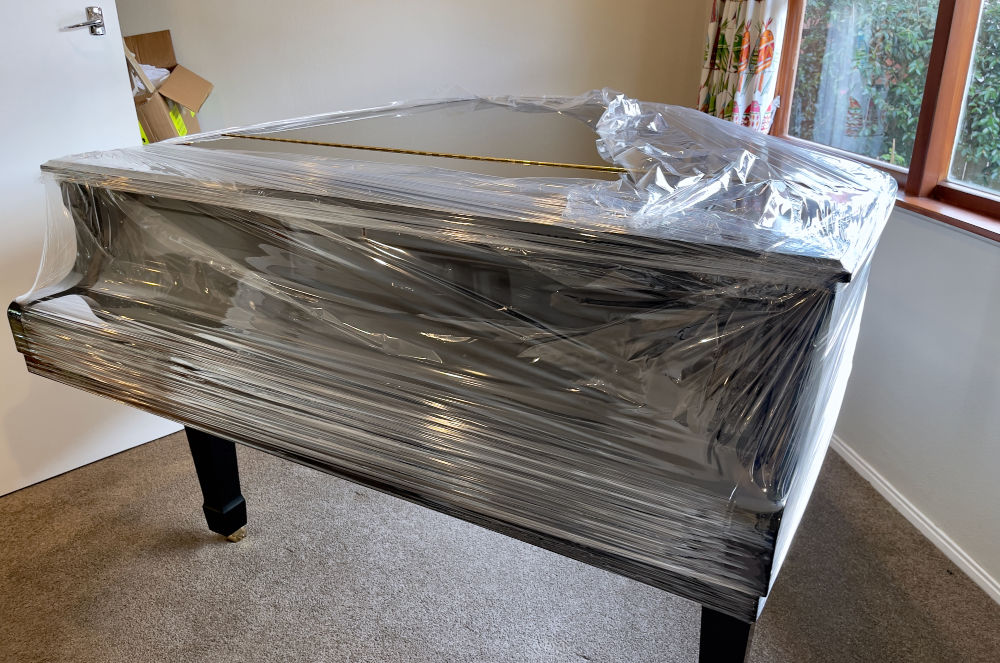
Understanding the available service categories helps you match the right provider to your specific move. Not every piano move requires the same level of service, and not every moving company offers the same capabilities.
Full-Service Movers with Piano-Handling Capability
General household movers who also advertise specialized piano handling represent the most common option for Calgary residents. These companies follow the Good Practice Guidelines for Canadian Movers developed by the federal Office of Consumer Affairs and are equipped to handle upright pianos as part of a broader residential or commercial move.
What to verify: Ask specifically whether the crew has piano-specific training, whether they carry a piano dolly and skid board, and whether their truck is climate-controlled. A company that handles pianos as part of its routine service offering will answer these questions without hesitation.
Alberta Pro Movers provides specialty-item moving services, including piano relocation, with fully insured crews and BBB accreditation. For moves that include a piano alongside other household or commercial items, this integrated approach avoids the coordination complexity of hiring separate providers.
Specialist Piano Movers
Niche firms focusing primarily on piano and organ relocation offer the deepest expertise for complex moves: concert grands, antique uprights, or instruments in difficult locations such as upper-floor condos with no elevator access. These companies typically carry the full range of specialist equipment and have crews trained specifically in piano disassembly and reassembly.
The trade-off is cost and availability. Specialist piano movers in Calgary may have longer lead times and higher rates than full-service movers. For a standard upright piano in a straightforward location, a full-service mover with documented experience moving pianos is usually sufficient.
White-Glove and Fine-Art Moving Services
White-glove moving service is a high-care moving approach featuring climate-conscious packing, moisture barriers, climate-controlled vehicles, custom padding, and monitoring of fragile items such as pianos and antiques. This category is appropriate for high-value instruments (concert grands, antique uprights, or pianos with significant sentimental or monetary value) and for moves involving significant climate exposure, such as long-distance relocations or winter moves.
White-glove services typically include shock and tilt monitoring during transport, custom crating where required, and documented condition reports at origin and destination. These services are available through select full-service movers and through specialist providers.
Best Practices for a Safe Calgary Piano Move
These practices reflect the consensus of professional piano-moving guidance and Alberta's regulatory framework for household-goods carriage.
- Conduct a detailed route assessment before moving day. Map the entire path from the piano's current location to the truck, measuring every doorway, hallway, and stairwell. Identify any obstacles to be removed and any building access requirements to be arranged in advance.
- Use professional-grade equipment throughout. A heavy-duty piano dolly, industrial straps, multiple layers of moving blankets, and a stair-climbing machine (where stairs are involved) are not optional upgrades. They are the baseline for a safe move. For grand pianos, a piano board is non-negotiable.
- Request a written estimate and review the bill of lading carefully. The Canadian Consumer Handbook advises getting estimates in writing and supervising loading and unloading. For a piano move, the bill of lading should include a condition inventory noting any pre-existing damage before the crew begins.
- Purchase declared valuation or replacement-value coverage. The default CAD 0.60 per pound per item liability limit under Alberta's conditions of carriage is insufficient for any piano of meaningful value. Confirm your coverage option in writing before the move begins.
- Verify the truck is climate-controlled for winter or summer moves. Calgary's temperature extremes make climate-managed transport a practical necessity, not a luxury. Ask specifically and confirm in writing.
- Allow 24 to 48 hours of acclimation after arrival before removing wrapping. Rushing this step is one of the most common causes of post-move soundboard stress and tuning instability.
- Schedule tuning two to three weeks after the move, not immediately. Tuning before the soundboard stabilizes wastes money and may require a second tuning shortly after.
- Keep documentation of the entire move. Photograph the piano's condition before wrapping, note any pre-existing damage on the bill of lading, and retain copies of all signed documents. This documentation is essential if a damage claim becomes necessary.
Common Mistakes in Piano Moving and How to Avoid Them
Underestimating the Weight and Size
Many homeowners assume a piano can be moved with the same approach as a heavy piece of furniture. A standard upright piano weighs between 400 and 900 pounds and has an irregular centre of gravity. Attempting to move it with standard furniture dollies or without proper strapping poses a serious risk of injury to everyone involved.
The fix: Treat a piano move as a specialist task from the start. Confirm that the moving company has piano-specific equipment before booking.
Skipping the Route Assessment
Discovering that a doorway is too narrow, or that a staircase has a tight landing, after the piano has been loaded onto the dolly is one of the most common causes of both damage and delay.
The fix: Measure every doorway, hallway, and stairwell on the route before moving day. Share those measurements with the moving company during the booking process.
Ignoring Alberta's Default Liability Limit
The CAD 0.60 per pound per item default is not a minor technicality. A piano worth CAD 10,000 covered at default rates for 700 pounds receives a maximum of CAD 420 in compensation if it is destroyed. Many piano owners discover this only after a claim is filed.
The fix: Ask about declared valuation options when booking, confirm your home insurance coverage, and get the valuation option you select documented in the bill of lading.
Moving a Piano in Extreme Cold Without Climate Protection
Bringing a piano from a heated interior directly into a minus-20-degree truck without proper wrapping and climate management is one of the fastest ways to cause soundboard cracking and tuning instability.
The fix: Confirm the truck is pre-warmed, ensure the piano is fully wrapped before it leaves the building, and allow proper acclimation time at the destination.
Tuning the Piano Immediately After the Move
Scheduling a tuner for the day after the move is a common mistake. The soundboard has not stabilized, and the tuning will drift again within days.
The fix: Wait two to three weeks after the move before scheduling a tuning appointment. If the piano has not been tuned in over a year, inform the tuner so they can first assess whether a pitch raise is needed.
Not Notifying the Building in Advance
Arriving at a Calgary condo building with a piano and no elevator booking, no damage deposit, and no certificate of insurance from the moving company will result in delays at minimum and a refused move at worst.
The fix: Contact building management at least two weeks before the move date. Confirm elevator booking requirements, insurance certificate requirements, and permitted move times.
Using Tape Directly on the Piano's Finish
Packing tape applied directly to a piano's lacquer or polyester finish will damage the surface when removed. This is a common mistake when movers are working quickly.
The fix: Wrap the piano in moving blankets first, then secure the blankets with stretch wrap. Tape should never contact the instrument's surface.
Final Thoughts on Moving a Piano Safely in Calgary
Safely moving a piano in Calgary requires more than physical effort. It requires the right equipment, a clear understanding of Alberta's household goods regulations and liability limits, preparation for the city's climate, and a moving crew with specialized experience in piano handling. The gap between the default CAD liability coverage of 0.60 per pound per item and the actual value of most pianos is wide enough to make proper insurance coverage a practical priority rather than a formality.
For homeowners and businesses in Calgary planning a piano relocation, the steps in this guide provide a framework for protecting both the instrument and the people moving it. The preparation phase, route assessment, equipment selection, and post-move acclimation period all matter as much as the move itself.
Alberta Pro Movers provides fully insured piano moving services for residential and commercial clients throughout Calgary and Alberta, with BBB accreditation and crews trained in handling specialty items. Get your free quote and move your piano with the care it deserves.
Frequently Asked Questions
How much does it cost to move a piano in Calgary?
Piano moving costs in Calgary vary based on the type of piano, distance to be moved, crew size, and whether stairs or an elevator is involved. Upright pianos in straightforward locations typically cost less than grand piano moves requiring disassembly and a skid board. Request a written quote that itemizes crew size, equipment, and any stair or long-carry fees. Pricing should be confirmed in writing before the move begins.
Can I move a piano myself without professional movers?
Moving a piano without professional equipment and trained movers carries serious risks of injury and instrument damage. The equipment required (heavy-duty piano dollies, skid boards, stair-climbing machines, and industrial harnesses) is not available at standard equipment rental outlets. For upright pianos in simple, ground-floor locations with no stairs, a small group of physically capable adults with the right dolly can manage the move, but the risk of injury and damage is substantially higher than with a trained crew.
How long does a piano move take in Calgary?
A straightforward upright piano move within Calgary typically takes one to three hours, including loading, transport, and unloading. Grand piano moves requiring disassembly, stair navigation, or elevator coordination can take three to five hours or more. Building access restrictions, elevator booking windows, and route complexity all affect the timeline.
Does my home insurance cover my piano during a move?
Home insurance policies vary significantly. Some cover belongings in transit; many do not, or they cover only a fraction of the replacement value. Contact your insurer before moving day to confirm your coverage. If your policy does not cover the move, ask the moving company about declared valuation or replacement-value coverage options above the default CAD 0.60 per pound per item limit under Alberta's conditions of carriage.
When should I tune my piano after a move?
Wait two to three weeks after the move before scheduling a piano tuning. This allows the soundboard to stabilize in its new environment. Tuning immediately after a move is not effective because the instrument will continue to drift as it acclimates. If the piano has not been tuned in over a year, or if the move involved significant temperature and humidity changes, inform the tuner so they can assess whether a pitch raise is required before standard tuning.
What is a piano board (skid board) and why is it required for grand pianos?
A piano board (also called a skid board) is a padded, reinforced board to which a grand piano is tilted and secured after its legs and lyre are removed. The instrument rests on its side on the board for the duration of the move. This approach distributes the piano's weight safely, allows it to pass through standard doorways, and prevents the kind of stress on the instrument's frame that would occur if it were carried upright. It is a standard piece of professional piano-moving equipment and is not optional for grand piano relocation.

Recent Posts
- How Much Does It Cost to Move Across Canada?
- What Movers Charge Per Hour Across Alberta: Calgary, Edmonton, Red Deer, Lethbridge, Fort McMurray
- First Apartment Checklist: Everything You Need for Your First Move
- Last-Minute Movers in Calgary: What to Do When You Need to Move Fast
- Senior Moving Services in Calgary: Compassionate Help for Older Adults
- Calgary Movers with No Hidden Fees: How to Get a Fixed Quote and Avoid Surprise Charges